Showing posts with label Business. Show all posts

Friday, January 10, 2025

How do cultural differences influence consumer behavior in brand recognition?

Cultural differences significantly influence consumer behavior in brand recognition in several ways:

Values and Beliefs
Different cultures have varying values and beliefs that shape consumer preferences. Brands that align with local values are more likely to be recognized and accepted.

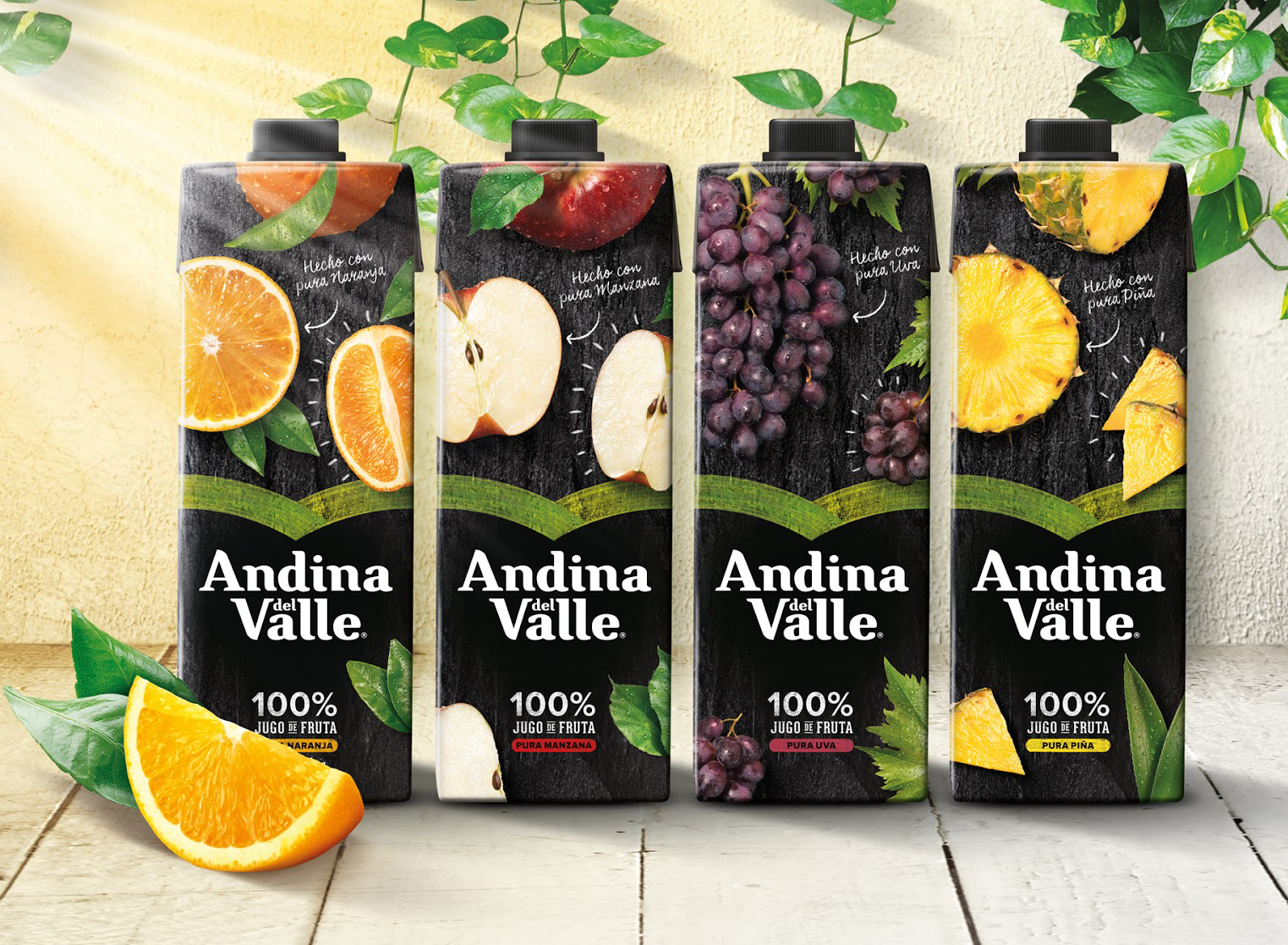
Would you buy a drink with black packaging? In Asia, it would be considered back omen.
Credits and Source: Andina Valle

Language and Communication
The way brands communicate, including language, tone, and messaging, can impact recognition. Brands that effectively use local languages and culturally relevant references tend to resonate better with consumers.

Symbols and Imagery
Cultural symbols, colors, and imagery can have different meanings across cultures. Brands must understand these nuances to avoid misinterpretation and to create effective marketing materials.

Social Norms and Behaviors
Cultural norms dictate consumer behavior, including purchasing decisions. For example, collectivist cultures may prioritize group consensus, while individualistic cultures may focus on personal choice.

Trust and Relationship
In some cultures, personal relationships and trust play a crucial role in brand recognition. Brands that prioritize building trust and rapport may be more successful in these environments.

Consumer Expectations
Different cultures have unique expectations regarding quality, service, and brand experiences. Meeting or exceeding these expectations can enhance brand recognition and loyalty.

Black is use in a clever way that brings out the type. Overall you see more white and orange color.
Credits and Source: Minute Maid/Coca Cola


Media Consumption
Cultural differences influence how consumers engage with media. Brands need to tailor their marketing strategies to fit the preferred channels and formats of different cultural groups.

Lifestyle and Trends
Cultural contexts shape lifestyle choices and trends, affecting which brands become popular. Brands that adapt to local trends can improve their recognition among consumers.

Global vs. Local Identity
Some consumers may prefer global brands for their perceived quality and prestige, while others may favor local brands that reflect their cultural identity. Brands must navigate this dynamic to optimize recognition.

By understanding and respecting these cultural differences, brands can enhance their recognition and appeal in diverse markets, ultimately driving consumer engagement and loyalty.

Tuesday, June 11, 2024

What are some benefits of good branding for a company?


Differentiation
A strong brand sets a company apart from its competitors by creating a unique identity and positioning in the market. It helps customers recognize and remember the brand, making it easier to choose over others.

Customer Loyalty
A well-established brand builds trust and loyalty among customers. When customers have a positive experience with a brand and resonate with its values, they are more likely to become repeat customers and advocates for the brand.

Premium Pricing
A strong brand allows a company to command premium pricing for its products or services. Customers are often willing to pay more for a brand they perceive as high-quality, reliable, and trustworthy.

Increased Market Share
Good branding helps a company gain a larger market share by attracting new customers and retaining existing ones. A well-known and respected brand can expand into new markets more easily, as customers are more likely to try new offerings from a brand they already know and trust.

Employee Morale and Attraction
A strong brand not only attracts customers but also attracts top talent. Employees are more likely to be proud and motivated to work for a company with a positive brand image and reputation.

Brand Extensions
A successful brand can leverage its reputation and customer loyalty to extend into new product or service categories. This allows for diversification and expansion of the business.

Crisis Management
In times of crisis or negative events, a strong brand can help protect a company's reputation. A well-established brand with a positive image is more likely to recover from setbacks and maintain customer trust.

Overall, good branding creates a competitive advantage, builds customer loyalty, and drives business growth for a company.

What is good branding?


Saturday, April 27, 2024

What is brand consistency, and how does it maintain creativity?

Working with a lot of companies, the stakeholders are so afraid of mis-communicating the brand that they work themselves into a box which constricts the brand growth and applications.

Brand consistency does not necessarily mean following it to the T at all times. While it is important to maintain a consistent brand identity, there is still room for flexibility and creativity within that framework. Brand consistency refers to the use of consistent visual elements, messaging, and brand values across all touch points and communication channels. It ensures that customers have a clear and cohesive experience with the brand.

However, this does not mean that a brand cannot expand or be more creative. In fact, creativity is essential for brand growth and innovation. The key is to strike a balance between maintaining the core elements of the brand and exploring new ideas and approaches. Flexibility allows brands to adapt to changing market trends, target new audiences, and explore new creative directions, while still staying true to their brand essence.

By being consistent in the core elements and values, a brand can establish a strong foundation and build trust with its audience. This provides the flexibility to experiment and be creative within the established brand framework, while still maintaining a cohesive and recognizable brand identity.

As for example, this is MTV latest logo:


And the logo is also recognizable in different designs. The main form is the big M. The question is how do you expand or adjust that your brand is still recognizable and strong?


Monday, July 3, 2023

What is good branding ?

In today's digital age, a good brand should have the following characteristics:


1. Authenticity: Consumers want brands that are honest and transparent about their values, beliefs, and practices.

2. Consistency: A good brand should have a consistent message and image across all channels, including social media, website, and advertising.

3. Engagement: Brands that engage with consumers on social media and other digital channels are more likely to build loyal followings.

4. Relevance: Successful brands are relevant to their target audience and are able to adapt to changing consumer needs and trends.

5. Personalization: Brands that use data and technology to provide personalized experiences to consumers are more likely to build long-term relationships.

6. Innovation: Brands that are innovative and embrace new technologies are more likely to stay ahead of the competition.

7. Social Responsibility: Consumers expect brands to be socially responsible and to have a positive impact on the world.

8. Customer Experience: A good brand should provide a seamless and enjoyable customer experience across all touch points, including mobile, web, and in-store.


Tuesday, June 13, 2023

7 Pillars of Brand Marketing

Today, I like to talk about the importance in branding in 2023 and what good branding can do. Marketing strategies have certainly changed and it affects all brands. Are you doing these 7 pillars in your branding strategies?


Recognition by Differentiation
Branding helps differentiate a company from its competitors, making it easier for consumers to recognize and remember the company and its products or services.

Strength in ID
A strong brand identity can increase customer loyalty and trust, leading to repeat business and positive word-of-mouth referrals.

Trust is Everything
Branding can help establish a company's reputation and authority in its industry, which can attract top talent, business partnerships, and investment opportunities.

Consistency is the Key
Consistent branding across all channels and touch points can help create a cohesive and professional image for the company, which can lead to increased credibility and legitimacy.

Define Your Brand
A well-defined brand strategy can guide a company's marketing and advertising efforts, ensuring that messaging and visuals are consistent and effective.

Higher Price Point
A strong brand can command higher prices for products or services, as consumers are willing to pay more for the perceived value and quality associated with a reputable brand.

Brand Up Online
In today's digital age, a strong online presence and social media strategy are essential for business success, and branding can help create a recognizable and engaging online persona that resonates with consumers.

It is always good to stop what you are doing and evaluate the current status of your brand. It might move off tangent so line it back up with today's market.


Tuesday, November 22, 2022

Standardize Web Shopping Cart Experience

 Hello Friends, 

Don't you think we should have a global shopping cart paying experience? As a consistent online shopper, you want to check out seamlessly and fast without having to think so much and finding out where are the essentials. Even when you are collecting your items, it should all be consistent in all websites, or mobile devices globally.

Here is one of a simple bold website that I like. The typeface has contrast, it is clean and clear.


Anything creative experiences should be on the homepage to be to impress your audience. While movement can be interesting, but too much, can be so irritating and annoying, especially if you are trying to read and get to the information. 

Any homepage on the website should have the basic info like: 

• Your logo – This is important as it states the presence of your brand. And as you scroll, anytime you click on the logo, everyone should know that it goes back to the home page.

• Contact – Contact info should always be at the expected placement. Either at the bottom of your homepage where the site map is or top right at the minimum, or have a page of contact in the menu bar.

• Service/product – This could be your shopping site, or individual service or product. Be clear and keep it clean looking.

• About us or the team – Talk about who you are as a company, your mission, objectives and goals. Add key people into the group like 6 people. This is to establish credibility that the customers can get a peace of mind that you have a good team working with you. If you are a one person company, tell how and why you started the company. People love a good story.

• Call to action – This is an area where you give something to get their email that gets lead generation or connection for the future of your company. It could be a 10% offer or a discount code, an online brochure info, something that your customers or clients would want and is worth for them to give you their email so that you can be connected.

• Your links to other social media platforms – These links are important because you would show traction of the likes and followers. Or your posts to keep your brand and product interesting and fresh.

I think in this day and age, everyone needs a website, to command an online presence. It could be as simple as a one page website. 

Here is some info on the best shopping cart experience:

https://www.convertcart.com/blog/cart-page-designs


Tuesday, April 28, 2020

Creating a Business Plan

Traditional business plan format
You might prefer a traditional business plan format if you’re very detail oriented, want a comprehensive plan, or plan to request financing from traditional sources.

When you write your business plan, you don’t have to stick to the exact business plan outline. Instead, use the sections that make the most sense for your business and your needs. Traditional business plans use some combination of these nine sections.

Executive summary
Briefly tell your reader what your company is and why it will be successful. Include your mission statement, your product or service, and basic information about your company’s leadership team, employees, and location. You should also include financial information and high-level growth plans if you plan to ask for financing.

Company description
Use your company description to provide detailed information about your company. Go into detail about the problems your business solves. Be specific, and list out the consumers, organization, or businesses your company plans to serve.

Explain the competitive advantages that will make your business a success. Are there experts on your team? Have you found the perfect location for your store? Your company description is the place to boast about your strengths.

Market analysis

You'll need a good understanding of your industry outlook and target market. Competitive research will show you what other businesses are doing and what their strengths are. In your market research, look for trends and themes. What do successful competitors do? Why does it work? Can you do it better? Now's the time to answer these questions.

Organization and management
Tell your reader how your company will be structured and who will run it.

Describe the legal structure of your business. State whether you have or intend to incorporate your business as a C or an S corporation, form a general or limited partnership, or if you're a sole proprietor or LLC.

Use an organizational chart to lay out who's in charge of what in your company. Show how each person's unique experience will contribute to the success of your venture. Consider including resumes and CVs of key members of your team.

Service or product line
Describe what you sell or what service you offer. Explain how it benefits your customers and what the product life cycle looks like. Share your plans for intellectual property, like copyright or patent filings. If you're doing research and development for your service or product, explain it in detail.

Marketing and sales
There's no single way to approach a marketing strategy. Your strategy should evolve and change to fit your unique needs.

Your goal in this section is to describe how you'll attract and retain customers. You'll also describe how a sale will actually happen. You'll refer to this section later when you make financial projections, so make sure to thoroughly describe your complete marketing and sales strategies.

Funding request
If you're asking for funding, this is where you'll outline your funding requirements. Your goal is to clearly explain how much funding you’ll need over the next five years and what you'll use it for.

Specify whether you want debt or equity, the terms you'd like applied, and the length of time your request will cover. Give a detailed description of how you'll use your funds. Specify if you need funds to buy equipment or materials, pay salaries, or cover specific bills until revenue increases. Always include a description of your future strategic financial plans, like paying off debt or selling your business.

Financial projections
Supplement your funding request with financial projections. Your goal is to convince the reader that your business is stable and will be a financial success.

If your business is already established, include income statements, balance sheets, and cash flow statements for the last three to five years. If you have other collateral you could put against a loan, make sure to list it now.

Provide a prospective financial outlook for the next five years. Include forecasted income statements, balance sheets, cash flow statements, and capital expenditure budgets. For the first year, be even more specific and use quarterly — or even monthly — projections. Make sure to clearly explain your projections, and match them to your funding requests.

This is a great place to use graphs and charts to tell the financial story of your business.


It is good to complete this exercise plan as now, you will be more concrete in your visions to yourself, potential investors, and to your vendors.

The next step is to establish your Branding Tools, (the Pull), which Shamiko Design can help at this point) and later using your Branding Tools to (PUSH) the Marketing Strategy to spread your brand awareness to get more leads which can lead to return on investments and more. Make sure your set your budget for the Pull and Push Tools.

Monday, January 18, 2016

5 Types of Organizational Structures

Were you ever curious what kind of organizational structure you have in your company? When companies get larger, they create more layers in hierarchy, for growth and development. People get more specialized in their skills in comparison to flat organizational structures, where one person can have different skill sets and responsibilities. However, we must define what kind of model your company has, and that is determined by your company's size, philosophy and function. Sometimes, your company actually combines a few of these together. It depends what will work in your group.

Functional
Organizations that group positions by similar roles follow a functional structure. The structure follows a hierarchical model that includes clearly identified roles, authority and promotional pathways. Employees in each department fill duties not covered elsewhere in the company, minimizing an overlap of tasks. You may divide work units by expertise, resources, skills and activities. For instance, your organization may include production, finance, human resources and marketing groupings.


Divisional
The divisional structure is defined by the grouping of departments and is particular to larger companies. The divisional structure follows a functional model within each division. Specialized departments help managers keep track of the products and activities the company develops. Your departments might distinguish between customer service, production and geographic location. Managers can focus resources and outcomes on their specific departments. The structure helps managers monitor performance more easily than some other models.


Matrix
The matrix structure combines the specialization provided by a functional structure and the focus provided by a divisional structure.Your employees would be part of teams that connect functional roles with divisional roles. Each employee belongs to at least two formal groups; one is a functional group, and the other is a project, product or program team. Your employees also report to two bosses -- a functional group boss and a team boss. The structure increases your employee motivation and allows training across functional areas.


Team
Team structures organize each function into an objective-based group. Members from each of your departments work together to solve problems and find opportunities. Your employees might be involved with product development teams or a diversity task force. The team structure can help remove barriers between departments and foster effective problem-solving relationships. It can also motivate employees and increase decision-making times.


Network
In a network structure, your organization would rely on other organizations to perform important roles. For instance, you may employee an accountant, website administrator or security personnel on a contractual basis. You reduce the overhead cost of your company's operations because you don't need to hire as many staff members. 

Saturday, August 1, 2015

Tools for Startups

At Shamiko Design, we find out what your needs are, plan a branding strategy and design an impactful brand identity that is unique and strong... Communicating your brand promise.

Some people asked me "Sharon, Why do I need Branding?" The answer is simple: A strong brand design creates "pull" factor, in customers. It increases returns on investments, tells your company’s story and provides unique experiences. Therefore, giving you an edge over your competitors when choosing between products.

Branding through good design creates lasting impressions in people's hearts and minds, therefore, promoting brand loyalty.

STORY:
Celia, newbie at wines, goes to Safeway to buy a bottle of red wine for her dinner party, she was bombarded by all kinds of brands on the shelf and there was no taste test either. So the only thing left was to choose the best looking label and read what the content may be.  - Impression counts a great deal!


Creating a good brand design is the first step that provides tools you need to start your business before any marketing takes place. Marketing is the "push" factor that takes your products out to the market and gets your brand awareness out there.

A brand is much more than a name or a logo—your brand is your creative touch points for everything about your company. What I mean by touch points are the visual, physical, psychological and sensory aspects, which I will elaborate, in my later posts.

You may first start off with creating the name of your company and designing your logo and creating a brand identity that includes stationery, business cards, envelopes, invoice and electronic versions, as well or a PowerPoint slide template for your sales presentation to your customers.

[ Good Design is Good Business ]

To further build your brand, you may want to consider a website; which is your online store presence. Or design a white paper, flyers, posters, and a brochure, both digital or printed. If you have a physical storefront, a great impactful signage and creative interior design of the store can draw in customers and bring about experiences. Branding is all about creating experiences for your customers. 

Packaging/labels for your products is a must to tie in your identity to create a strong brand consistency. These tools are needed to give your company a cohesive and distinctive edge for starting your brand.

When you approach people, you can be proud when people go: "Ooooooooo... "

That itself says everything.


Brand Design for Cribatures showing the range of products in cohesion.

Monday, July 6, 2015

Brands Pull & Marketing Push

Branding is what your persona says about your company. It may be the look and feel of your product and your company, or it could be the performance of your product. It could also be your visuals, your story, your voice, and the impression people get when they experience your company. The reason I say "experience" is that the way your employees treat your customers reflects your brand. How your employees dress and perform also reflects your brand. How does each salesperson greet every customer?

In each case, as you build and extend your brand, your brand can elevate your company to different levels or categories that are relative to your target audience.

For example, when you are creating a brand extension, you already have a basic, successful business targeting a younger, mid-range audience, and you want more market share; hence, you extend your brand toward a higher income bracket. You may still keep your existing brand and create a different look and feel under the "same umbrella" for a higher income market.

The idea of PULL, yes, a brand pulls your customers toward you. They are attracted to the product, the company, the service, the performance, or the price. When the buying experience is good, your customers will be brand loyal to your company and its products/services. Some will become your advocates or be compelled to write about you, and some will recommend more business to you. Those are the results of having a good brand with positive experiences.

Some examples of tangible brand identity are your website, your logo, your stationery, marketing collateral, your location/interior, your storefront, your employees, your business card, and your products. Intangible branding is the persona of your company; it is also the voice, how the content is communicated consistently, what your employees say about you, your culture, and, in some cases, even the smell.

A great example is Singapore Airlines. When you approach the counter, there is a certain scent, and when you enter and leave the plane, the same scented fragrance lingers in the air, reminding you of Singapore Airlines. No airline has that detailed branded touch.

Marketing, however, is indeed a PUSH, pushing your products and services out to the marketplace to attract more customers to notice your company and products. There are many different ways to market your product, and you have to consider what resources you have within your budget to manage the promotions. There is no one-size-fits-all method for marketing.

Promotions involve social media marketing, trade shows, email marketing, campaigns, brochures/mailers, cross-sells, e-commerce sites, landing pages, white papers, magazines, radio ads, TV commercials, billboard ads, and more.

Make sure you have a good brand to start with, and then those will be the tools for you to market your company aggressively. The more targeted people who know about who you are, the greater the return on investment will be. Do not waste time on people who do not need your product. It is all about the right target and focus.

Tuesday, June 30, 2015

Good Design Brings in the Business

I just want to share with you a great digital business card online store, called Moo. What a great name! Sounds like a cow and I have no idea how it relates to printing but it sure sounds cute. The brand iD for a printing company is awesome and it really made me trust that online store and.... made me order some business cards using their templates... Ha! God Forbids... as I myself is a designer and very particular, and I just wanted to try the printing quality. I was pretty happy with the results.


Because...
1. The site looks professional and the templates are beautifully designed and well thought out.

2. The colors are appealing and fresh. It just makes me want to go through and check out the site.

3. Price is a huge issue with us isn't it? I think they were pretty expansive in the beginning but here, they were smart enough to have an offer.... and I took the advantage and printed some cards, I think that the "Offer" price point is what customers wants to pay. You have to be competitive in the market and provide quality products.

4. I like the way they started with just business cards... and concentrated on perfecting that part of the business and now they are launching flat fliers. In growing a business, it is OK to be small with a strong niche and you always have a chance to grow later. If you are good, you will have customers that will follow you. Like me... following Moo.

5. Moo guarantees their quality. Most online printing sites do not have this feature.

6. One more thing, did I tell you that when you get their cards it come in a beautiful box with their color brand strips and smart take-away of verbiage? Like, 5, 4, 3, 2, 1 liftoff - your new Mini Cards are here! What a brilliant line. So as you can see I am so impressed that I felt the need to share and write a blog about them.


Monday, May 11, 2015

Financial Stages of an Enterprise

Some things that an entrepreneur needs to know are these stages to get funding. Without capital, a business will never grow.


The first funding benchmark is the seed stage. This represents the initial capital used to do product and/or service development, patent filings, market surveys and research and business partner recruitment. The emphasis is on examining business idea feasibility and getting the firm ready to commence operations. These funds come predominantly from either the entrepreneur's personal savings, a severance package from a prior job, or cash raised from friends and family members. Many venture capital funds do not invest at the seed stage because the risks are very high.

The second benchmark comes when the venture is ready to launch. Also known as start-up financing, at this stage the business is seeing its first revenues but has yet to show a profit. This is often referred to as the series A round of investment and is typically where the enterprise brings in its first "outside" investors.

After a successful launch proves the viability of the business model, funds will be needed to further develop the marketing plan, hire more staff and management, and establish strategic alliances in the market. That third benchmark is often referred to as the second-stage, or series B, round.


The fourth benchmark involves securing a line of credit from a commercial bank at a time when revenues are gaining momentum. At this point--when monthly cash flow is at break-even--the business merits "working capital." No investors are involved at this point.

When the fifth benchmark arrives, the firm is typically looking to expand its operations at a faster pace. Internal funds (profits and lines of credit) are insufficient to support the development of assets and internal capabilities necessary for stronger sales growth. At this point, the firm seeks to raise another external round of capital from investors, the series C round. Here, capital is used to substantially ramp up existing operations and move the company into a significant position in the industry.

Source: David Newton

Monday, April 21, 2014

Most Effective Marketing Channels

The usage of videos and imagery have proven to be more effective than other media channels.

LinkedIn has documented research indicating that members of the "buying committee" are more likely to connect with vendors on LinkedIn than any other social media platform.


So, if video is good for business (Dell Inc. Enterprise Solutions Group increased its revenue 8% largely because its ramped-up video marketing efforts got 6.5 million views), and if LinkedIn is good for business, then combining the two makes sense.

Here are three ways to make that combo work for your B2B organization.
1. Turn your boring resume-looking profile into an interactive marketing tool
2. Generate more leads
3. Improve your outreach efforts

Read more: http://www.marketingprofs.com/articles/2014/24936/three-ways-to-use-videos-to-maximize-your-linkedin-marketing-and-lead-generation#ixzz2zYho1jpW
Source for Graphs: B2B Marketing Prof

Wednesday, March 26, 2014

Dividing Equity For a Start Up


I am being approached by start-ups a lot because of my branding and design expertise. As these new innovators are needing more help in business start-ups, I am naturally involved in the business strategy and marketing as well. I think it is important to know about how to divide up the equity for fair business practice and have people who work for you motivated by some incentive.

I found this article by Mike C. Volker very helpful when new entrepreneurs ask me questions or proposed to me about equity divisions.

Do You Need a Partner?
If you are very bright, very tenacious, and financially well endowed, then you can start a company which you own in its entirety and in which you can hire a bright, capable, highly motivated and well-paid management team. However, if you do not fit this description entirely (I might add that, if you do not possess at least one of these attributes, you might want to re-think starting your own business), then you will likely have to bring "partners" into your company by giving them equity, i.e. some share ownership. Obviously, investors who bring money to fuel the growth of your company deserve some ownership. Similarly, key people who join you on your team, or who start the company with you, will want some form of ownership if they are making a valuable contribution for which they are not being fully paid in cash. Others who contribute their skills, experience, ideas, or other assets (such as intellectual property) may be given shares in your company in lieu of being paid in cash.

How do you deal in New Partners?
Valuation is the issue. What is the new partner's contribution worth in relation to the whole pie? At that moment in time, what is the company worth and how is that worth determined? Bringing in new shareholders always means "dilution" to the existing shareholders. If a new investor is to receive a 10% stake in the company, then a shareholder who previously held 40% of the equity, will now hold 36% (i.e. 90% of 40%). You never actually never give up your shares when new people are dealt in. You simply issue more shares (the same way governments print money). Issuing more shares is what causes the dilution. If you have 100 shares and you want to give someone 10%, you'd have to issue 11 new shares (11/111 x 100 = 10%, approximately).

Unless you are greatly concerned about control issues, each time you dilute you should be increasing your economic value. If you dilute your ownership from 40% to 36%, you still hold the same number of shares, but the per-share value should have increased. For example, if you entice Terry Mathews (of Newbridge and Mitel fame) to your board by paying him 10%, it is quite likely that your shares will double or triple in value (i.e. market value for sure and hopefully also intrinsic value because of strengthened leadership). If your 40% was worth $1 million, your resulting 36% may now be worth $3 million!

If you bring in a new VP of Marketing and give her 5% as a signing bonus, how do you know that her contribution will be worth 5%? How do you measure someone's reputation? Unless the person is well known or has a proven record, it may not be so easy. That's why vesting (described later) may be appropriate.

There is only one way to bring in new partners: carefully and with deliberation. A partner may be with you for life. It may be more difficult to terminate a business partnership than it is to obtain a marital divorce. So think about it!

Who Should Get What?
What percentage of the company should each partner in a new venture receive? This is a tough question for which there is no easy answer. In terms of percentage points, what's an idea (or invention or patent) worth? What's 5 years of low salary, sweat and intense commitment worth? What is experience and know-how worth? What's a buck worth? "Who should get what" is best determined by considering who brings what to the table.

Suppose Bill Gates said he'd serve on your Board or give you some help. What share of the company should he get? Just think about the value that his name would bring to your company! If a venture capitalist thought your company was worth $1 million without Gates, that value would increase several-fold with Gates' involvement. Yet, what has he "done" for you?

Often, company founders give little thought to this question. In many cases, the numbers are determined by what "feels good", i.e. gut-feeling. For example, in the case of a brand-new venture started from scratch by four engineers, the tendency might be to share equally in the new deal at 25% each. In the case of a single founder, that person may choose to keep 100% of the shares and build this venture through a "bootstrapping" process, in order to maintain total ownership and control by not dealing in other partners. It may be possible to defer dealing in new partners until some later time at which point the business has some inherent value thereby allowing the founder to maintain a substantial ownership position.

The answer to the question "who should get what" is, in principle, simple to answer: It depends on the relative contributions and commitments made to the company by the partners at that moment in time. Therefore, it is necessary to come up with a value for the company, expressed in either monetary terms or some other common denominator. It gets trickier when there are hard assets (cash, equipment) contributed by some parties and soft assets (intellectual property, know-how) contributed by others.

Let's look at a some examples for illustration.
1. Professor Goldblum has developed a new product for decreasing the cost of automobile fuel consumption. He decides that in order to bring this innovation to market, he will need a business partner to help him with a business plan, and then manage and finance a new company formed to exploit this opportunity. He recruits Sam Brown, aged 45, who has a good record as a local entrepreneur. They agree that Sam will get 30% of the company for contributing his experience, contacts, and track record plus the fact that he will take a $50K/year salary instead of a "market" salary of $100K for the first two years. Furthermore, they agree that Sam will commit his full-time attention to the firm for 5 years and that should he leave, for whatever reason before the full term, he would forfeit 4% of the equity for each year under the 5 year term. The Professor takes 60% for contributing the intellectual property and for providing on-going technical advice and support. The Professor "gives" the University a token 10% because according to University policy, the University is entitled to "some share" of his intellectual property because of its contribution of facilities even though, under its policy, the intellectual property rights rest with the creator. Although these numbers are somewhat arbitrary, they are seen by the parties as being fair based on the relative contributions of the parties. As a taxpayer, one might suggest that the University got the short end of the deal, but that's a moot point.

2. Three freshly graduated software engineers decide to form a new software company which will develop and sell a suite of software development tools, bearing in mind the paucity of software talent plaguing the industry. They all start off with similar assets, i.e. knowledge of software, and comparable contributions of "sweat equity". Heidi takes on the role of CEO of the new venture and they divide the pie as to 40% for Heidi (because of her greater responsibilities) and 30% each for the other two. They are happy campers for now. Some time later, they decide to recruit a seasoned CEO with relevant experience and bring in a Venture Capital investor to fund the promotion of their then-developed and shipable suite of software products. They will then have to wrestle with the issue of what their company is now worth and how much ownership they will have to trade for these new resources. This will be determined by the venture capital suitor(s) in light of current market investment conditions and the attractiveness of this particular deal.

3. Four entrepreneurs who have recently enjoyed financial windfalls from their businesses, decide to get into the venture capital business. They decide to form a company with $10 million in investment capital. Harry provides $3 million, Bill provides $2 million, and the other two each provide $2.5 million. How much of the new company will each of them own? (This isn't a trick question.) For assets as basic as cash, it is easy to determine "fair" percentages.

In the case of the second example above, we have a situation in which a company is established and has some value by virtue of its products and potential sales in the market. The company's Board decides to bring in an experienced CEO (this also makes the venture capitalist happy) to develop the business to its next stage of growth. Although it may be possible to hire such a person and pay him/her an attractive salary, it probably makes more sense to bring in such a person as more of a partner than a hired hand. In this case a lower-than-market salary could be negotiated along with an equity stake. One way of doing this is to apply the difference between market rate and the actual salary over a period of time, say 5 years, to an equity position based on a company valuation acceptable to the founders. If a venture capital investment has been made or is being negotiated, this may set the stage for such a valuation. For example, Louise was earning $125,000 per year working as the CEO of an American company's Canadian operations. She agrees to work for $75,000 per year for 5 years. She is essentially contributing $250,000 up front (in the form of equity that does not have to be raised to hire her). If the company has been valued at $2 million, she ought to receive something in excess of 10% of the company. However, her shares would "vest" over 5 years meaning that each year she would receive one-fifth of the shares from "escrow". She would forfeit any shares not so released should she break her commitment or should her employment be terminated for cause. In this example, Louse's salary is really $125,000 per year but she is investing a portion of this in the company's equity (on a tax-advantaged basis, I might add!).

For more mature companies and especially for publicly-listed companies, it is possible to provide managers with incentive stock options as an additional incentive in the form of a reward if the company performs well and if the stock price reflects this performance. However, this is not the same as ownership and should be viewed as part of a salary package.

Important Point: Don't confuse equity (i.e. investment and ownership) with income (i.e. salary)!

Shares vs Percentage Points
Sometimes people will get hung up on percentage points. For example, if a new company is created which consists of many people, it may not be possible to divide that fixed 100% into 20 or 30 meaningful chunks of 10%. It just won't work. Some people may receive only 3% and may feel slighted by what appears to be an insignificant amount (although I sure would like to have had 1% of Microsoft when it got started). It's too bad that only 100 percentage points are available. However, there is no limit on the number of shares which can be issued. So, let's issue 10 million shares and give our 3% person 300,000 shares. We all know that someday these shares might be worth $5, $10, or $50!
Work it out! It suddenly becomes more palatable.

So, how many shares should be issued? Small public companies usually have between 5 and 15 million shares outstanding. Larger public companies may have 100 million or more shares issued. Private companies, large or small, have fewer shares issued - anywhere from 1 to perhaps a few million. The number is not really important for private companies because these shares do not trade in a public market. When companies go public, i.e. list their shares for trading, there are often stock splits such that 5 or 10 new shares are traded for each existing share in order to give a company a "normal" number of shares and a "normal" price range.

The number of shares which you will issue when you first start out should be determined by how many partners you wish to have. If only a handful, then you could simply issue 100 shares with the percentage points being equivalent to the number of shares. It might make you and your partners feel better to increase this number by a few orders of magnitude. That's OK, too. If you have many partners, it helps to have many shares - even if only for psychological reasons.

Novice entrepreneurs may think, "Gee, it would be nice to own 5 million shares in a company." True, but it may cause complications if you have too high a number. For example, if you start with 10 million shares and then deal others in so that you end up with 15 million shares and then you decide to go public, resulting in over 20 million shares, this may be too large a number and you may have to do a roll-back or consolidation (see next paragraph).

Stock Splits and Stock Rollbacks
You have probably heard of a "stock split". This happens often with publicly traded companies when their share prices become "too high". Microsoft, for example, has split many times. That's why Bill has 270 million shares. Microsoft does this when the share price appears too expensive for the average investor. After all, who wants to pay $500 for one share? If you split 2 for 1, then the price per share would be $250, but if you split 5 for 1, the price per share would now be $100. When companies split their shares, they do so simply by exchanging new shares for old shares with all the shareholders.

Stock rollbacks or share consolidations as they are sometimes called are the reverse of stock splits - but with one notable difference. When a rollback is done, 1 new share is issued for 2 or 3 (or whatever the Board decides) old shares. However, the new shares are issued under a new corporate name meaning that the company must change its legal name. Often the change is minor, such as from Acme Corp to Acme Inc or from Acme Corp to Acme 2000 Corp. This is done so that the new shares are not as likely to be confused with old shares. This is not the case for splits, assuming that shareholders will want to trade in their old shares for new shares whereas in the case of consolidations shareholders will not be eager to trade their old for their new.

Why a rollback? If a share price is too low, the company may appear like a "penny stock" or nickle-and-dime outfit. So, if a stock is trading at $.10 per share a 1 for 10 rollback, will give the stock a more respectable dollar appearance. Also, if a smaller, more junior company has 500 million shares outstanding (which can happen), it may be better, for market reasons, to have a tigher "float" (i.e. number of issued shares trading on the market).

In terms of what is appropriate, here are some ballpark numbers to consider. Private companies, closely held (i.e. few shareholders) would have a small number of shares, regardless of their size. Private companies with a larger number of shareholders (say up to 50) could have a few thousand or even a few million shares issued. Small public companies (with annual sales below $10 million) such as those trading on a junior stock exchange, like Vancouver, would have between 5 and 10 million shares issued. Senior companies (with annual sales in excess of $100 million) such as those trading on Toronto, might have more than 50 million shares issued. The really mammoth corporations with sales in the billions of dollars will likely have more than 100 million shares issued. Microsoft has about 600 million shares issued as at March, 1997.

Implications of Ownership
Ownership means sharing risks and sharing rewards. It implies a certain degree of control (i.e. risk management) insofar as the shareholders appoint the management team and it implies a sharing in the value of the company - however measured (i.e. profits, the net worth, market value, etc). These are two distinctly different concepts. The astute entrepreneur might ask herself if she wants to be a wealthy, independent owner or if she wants to be a very busy manager! Most owners, especially founders appoint themselves as the senior managers. And, they have this right. But, I'd rather be rich than busy or poor. The most important aspect of share ownership is that as the value of the company increases, one's share of the value also increases. Bill Gates doesn't really have billions of dollars. What he has is a fraction (one-quarter, roughly) of a business worth many billions of dollars. Your risk is the investment you put in, other forgone opportunities, and possibly reputation (if the deal sours). But the reward may be unlimited. That's why equity is so attractive. It is not uncommon for a founder of a high tech venture to own a million shares (which cost him very little in the form of cash) and see these shares appreciate to a value of several million dollars in a relatively short time frame. There are literally thousands of examples of this - Gates being the most prominent one.

Ownership does not imply any additional obligations nor liabilities. Once an equity stake is purchased, or "vested", it belongs to the owner forever. It also entitles the owner to vote for the company's board of directors, its governing body. Depending on the relative shareholding, a shareholder may have very little control as in the case of a large public company or very substantial control as in the case of a small company in which he has more than 50% of the votes or in which he may have less than 50% of the votes, but still have great influence by virtue of a shareholders' agreement.

A very successful founder once said, "I'm not really very smart, but I sure do have a lot of smart people working for me!". This person understood the difference between ownership and management.

What's a Company Worth? (and When?)
How is value added to a business over a period of time? All companies start off being worth only the incorporation expense. As soon as people, money and assets are added or developed, a company will appreciate in value. If the management team comes up with a breakthrough technology, that may be worth millions of dollars! The development of products and customers adds value. The management team itself is worth something by virtue of its aggregate experience, skill, contacts, etc. Value is best measured in terms of potential, not in terms of historical earnings or financial track record - but in terms of future performance possibilities. Value increases both through internal actions and growth as well as through external contributions (e.g. cash and people) which facilitate such growth.

For founders and early investors, the upside potential is the greatest. In its early stages of development a company may be worth very little, especially to outsiders. All of the value may be dormant within the team - awaiting development. Those who contribute at this early stage deserve to enjoy enormous gains because they are the ones who are bold enough to take the initial risks. An "angel" investor who provides a University faculty member with a small amount of start-up funding, say $50,000 to prepare an invention for exploitation, may easily deserve 10 or 20% of that business. After a concept is more fully developed, this initial position may be viewed as a "steal", but then again, most such "steals" end up being worthless deals!

It is both unhealthy and unrealistic for an entrepreneur to begrudge the stake held by his or her early backers. Sometimes there is a tendency towards seller's remorse. For example, an entrepreneur who sells 20% of his firm for $50,000 may feel cheated one year hence when a serious investor is willing to pay $500,000 for 20%. This is flawed thinking. Without that intial $50,000, this company may never have survived its first year. In this illustration, the founder initially had 100%, then 80%, then ended up with 64%. The angel had 20%, then ended up with 16%. The rich investor ended up with 20% - at least until the next round at which time they will all again suffer a dilution. Ideally, as time marches on, the value of the company increases dramatically such that subsequent dilutions become less and less painful to existing stakeholders. Sometimes, when milestones are not achieved, the early investors and founders must swallow a bitter pill by enticing new investors with large equity positions with major dilutive consequences. But, that's business!

The value of a business is best ascertained by what an investor is willing to pay for it (i.e. its shares) or what a potential strategic acquisitor (i.e. an investor (or competitor) who wants to buy it for strategic business reasons) is willing to pay for it.

It is prudent management philosophy to always be thinking in terms of making a business attractive to such suitors by building a solid foundation and by nurturing and growing it. The business should always be in a condition to sell it.

Other Alternatives
Let's be creative. You don't always have to give up shares in your company if you can't pay cash. Also, it gets messy (from a corporate governance perspective) having too many, especially small, investors. You might be able to negotiate a deferred payment arrangement, possibly with interest. If you need to acquire a tangible asset, you can likely obtain bank or third-party financing. For soft assets like intellectual property, you could consider entering into a royalty arrangement, i.e. for every unit sold embodying said intellectual property, you pay a 5% royalty on sales to the provider of the asset. And remember, equity is expensive. Giving someone a 5% stake, means that that party owns 5% of your firm's net worth and profits forever! So, tread cautiously.

Summary
Dividing the pie is not easy. In the end, or to put it more correctly - in the beginning, it is important that all equity partners accept the deal. Each shareholder would like to own a bigger percentage - that only makes sense. But, unfortunately, all the "percents" have to add up to 100. That's why it's nice to be able to issue 10 million shares. It sounds a lot better to own 100,000 shares in the next hot software deal, than to only own a mere one percent!

At the time you sell some or all of your shares in the company, remember that it is dollars which you put into your bank account, not percentage points.

Tuesday, December 3, 2013

Why Rebranding is Needed

You do not need a very complicated website to show the success of your company. That is a myth.

When a website get too complicated, it becomes a turn off and a click off. Customers have no patience to wait for the site load... and to read through everything to figure things out. Help your customers by making things simple.

Your customers can tell if your site is professional done or not. It is very important to promote the right branding image for your company. You do not want your site to be confusing but want at least 3 most important things you want your customers to take away. The rest should be information that leads the customers into your pages gracefully.

The 3 most important things are:
1) Your Brand Feel. For that gives confidence, creates value and professionalism that reflects reliability.
2) What your company does. That includes a logo and a brief description.
3) What you are selling. It could be shown in photos or short descriptions.
and...

The 4th important thing: Offers and Deals
In some cases, like e-commerce sites, offers or deals are important in the first page or in a landing page. This is because you want to make your customers feel valued. And by giving them a discount, they will look forward to more deals in future, checking your site and spreading the word around.

Do not forget that to reach recurring customers. You want to make your site fresh with new information. Maybe to have a new video every month, or the latest content that changes in one of the sections in the front page. That could be a link to new article or a recipe, or an introduction to a famous person, or winning an achievement etc.

Here is a site: BEFORE REBRANDING


Here is a site: AFTER REBRANDING


These are little important things to note when you are evaluating or creating your company's site.
Good Design Is Good Business.
ShamikoDesign.com

Wednesday, November 13, 2013

Thursday, July 18, 2013

Change Your Mundane Lifestyle...

 ...By making a decision to change your attitude. Be more focus, plan the outcome, be specific/accountable, and write four things that drive your goals forward everyday.

Yesterday I went to this wonderful Meetup seminar. The seminar is called Your Business Plan, Your business on steroids. You in control with a peace of mind. Sunil Bhaskaran is the author of book Cathaya Mind and cathayamind.com

Did you know that when you plan your schedule out, instead of saying; lunch at Gary Danko, you add the outcome – "Lunch/GaryDanko: close business deal". With this written, it is an affirmation that your are going to close the deal. It is a positive way of thinking and being focus and specific.


4 Ways to Change Your Mindset
1) Focus on Goals: Decide on what you want your goals to be 5 years, 10 years, 20 years (break it down to smaller chunks)

2) Process Specific: Be specific about how you are going to achieve it

3) Plan With the desired outcome: When you write it down in your calendar, you are confirming it and making it happen, when you write the outcome, you are putting an accountability to yourself.

4) Get help if you are stuck. Call Sunil. If you do not do something about it, you will be back to your old ways and not achieving what you want. When you talk it out with your friend, you are affirming that you are going to do this.

Be Motivated and be in that Mood and get that Energy going...
by being scared, desiring something or to help someone you care deeply about... etc for these are some ways of getting yourself motivated.